What Is Apache Ranger?
Apache Ranger is an open-source, centralized security administration framework for the Apache Hadoop ecosystem. Originally developed at Hortonworks (now part of Cloudera), Ranger provides a unified web UI and REST API for defining, managing, and auditing security policies across all major Hadoop components — HDFS file permissions, Hive table and column access, HBase row-level security, Kafka topic access, YARN queue permissions, and more.
Ranger's core value proposition is centralized policy management: instead of configuring access control separately in each Hadoop service (Hive ACLs, HDFS ACLs, Kafka ACLs), Ranger provides a single administrative interface where all policies are defined and distributed to each service's Ranger plugin for enforcement. Policy changes propagate automatically to all connected services without restarting them.
Ranger Architecture
Apache Ranger has three components:
- Ranger Admin: The central web UI and REST API server where administrators define security policies (who can do what on which resources), data masking policies (how to mask sensitive columns for specific roles), and row-level filter policies. Ranger Admin stores policies in a database (typically MySQL/PostgreSQL).
- Ranger Plugins: Lightweight agents deployed within each Hadoop service (Hive, HDFS, Kafka, Trino) that regularly pull policies from Ranger Admin and enforce them locally — allowing services to continue enforcing policies even if Ranger Admin is temporarily unavailable.
- Ranger Audit: All policy evaluation decisions (who requested what, was it allowed or denied) are logged to Ranger's audit store (typically Elasticsearch or HDFS) for compliance reporting and security investigation.
Ranger in the Lakehouse Migration Context
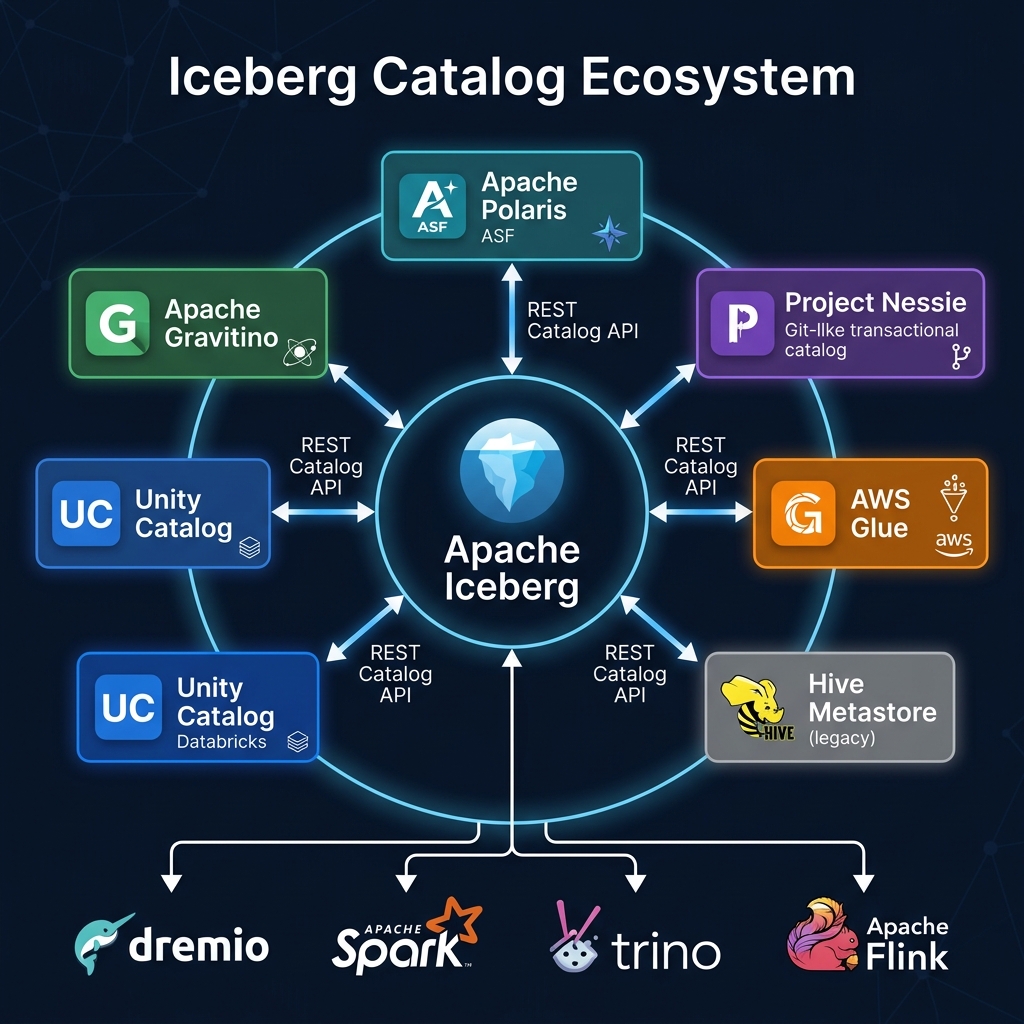
For enterprises with existing Hadoop deployments migrating to the cloud lakehouse, Apache Ranger plays an important transitional role. During migration, Ranger continues to govern on-premises Hive tables on HDFS while new Apache Iceberg tables in cloud object storage are governed by Apache Polaris or AWS Lake Formation. Ranger policies for Hive users must be replicated or migrated to the new catalog governance system as tables are migrated from Hive to Iceberg format.
Ranger also integrates with Trino via the Ranger Trino plugin — enabling Ranger-governed access to Iceberg tables queried through Trino in hybrid Hadoop-lakehouse environments.
Summary
Apache Ranger is the security governance standard for the Apache Hadoop ecosystem — providing centralized, audited, role-based access control across all Hadoop services. For organizations with existing Hadoop environments, Ranger provides governance continuity during the migration to cloud lakehouse architectures. For new cloud-native lakehouse deployments, Apache Polaris and cloud-native alternatives (AWS Lake Formation, Unity Catalog) provide more direct Iceberg REST catalog-level governance without Hadoop infrastructure dependencies.