The Lakehouse as a Data Science Platform
The data lakehouse solves the most frustrating problem in data science: access to good data. Traditional data science workflows were bottlenecked on data engineering: data scientists submitted tickets to get data extracted from warehouses, waited days, received stale dumps in CSV files, and then realized they needed different columns and started over. The lakehouse eliminates this bottleneck by giving data scientists direct, governed, self-service access to curated Gold and Silver Iceberg tables through Python interfaces they already know.
Python Access to Iceberg Data
Data scientists access Iceberg data through several Python interfaces:
PyIceberg: Direct Iceberg Access
from pyiceberg.catalog import load_catalog
catalog = load_catalog('polaris', uri='https://polaris.example.com/api/catalog')
table = catalog.load_table('gold.customer_features')
df = table.scan(row_filter="region = 'US-WEST'").to_arrow().to_pandas()
Dremio + Arrow Flight SQL
from pyarrow import flight
client = flight.FlightClient('grpc+tls://dremio.example.com:32010')
df = client.do_get(...).read_all().to_pandas()
# Sub-second for Reflection-accelerated queries
PySpark + Iceberg for Large-Scale Feature Engineering
df = spark.table('catalog.gold.customer_features')
features = df.groupBy('customer_id').agg(F.sum('ltv'), F.count('orders'))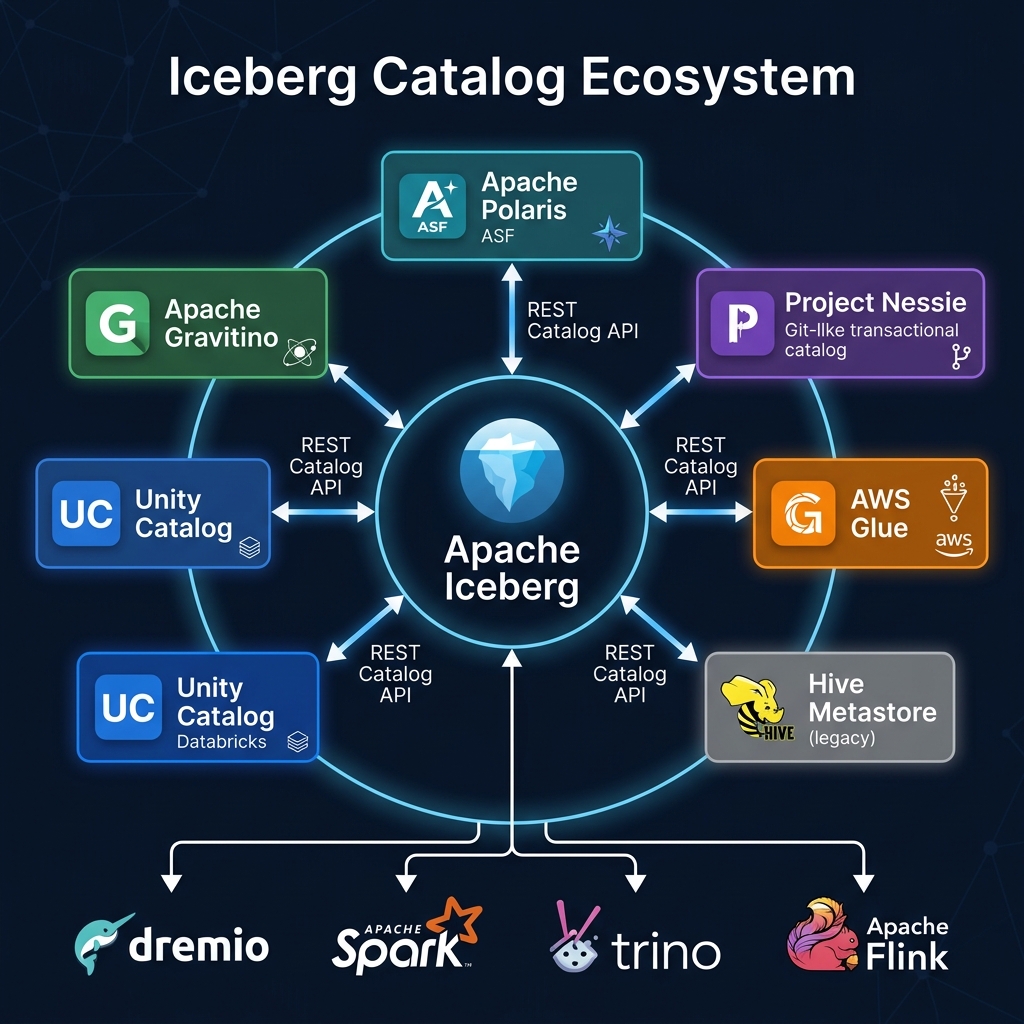
Feature Engineering on the Lakehouse
The lakehouse is the ideal platform for ML feature engineering:
- Historical features: Time travel queries recreate exact historical feature values — essential for training models on point-in-time correct features (no label leakage)
- Fresh features: Streaming-ingested Iceberg tables provide near-real-time feature values for online inference
- Feature sharing: Gold Iceberg feature tables serve as a shared feature store — data scientists publish computed features as Iceberg tables that other teams can reuse
- Version control: Nessie tags snapshot the exact data state used for each training run — enabling perfect ML reproducibility
Summary
The data lakehouse is transforming data science from a bottlenecked, ticket-driven, CSV-file workflow into a governed, self-service, feature-rich analytical platform. With PyIceberg for direct Python access, Dremio Arrow Flight SQL for high-throughput query results, PySpark for large-scale feature engineering, Nessie tagging for experiment reproducibility, and the AI Semantic Layer for autonomous agent data access, the lakehouse provides everything data scientists need — on trusted, governed, current data — without waiting for data engineering support on every feature extraction task.