What Is Multi-Engine Interoperability?
Multi-engine interoperability is the architectural property of the open data lakehouse that allows multiple different query engines to access the same data — read it, write it, transform it, and query it — through a shared catalog and table format, with each engine seeing consistent, up-to-date table state. It is the foundational property that distinguishes the open lakehouse from proprietary data warehouse architectures where data is locked to a single engine.
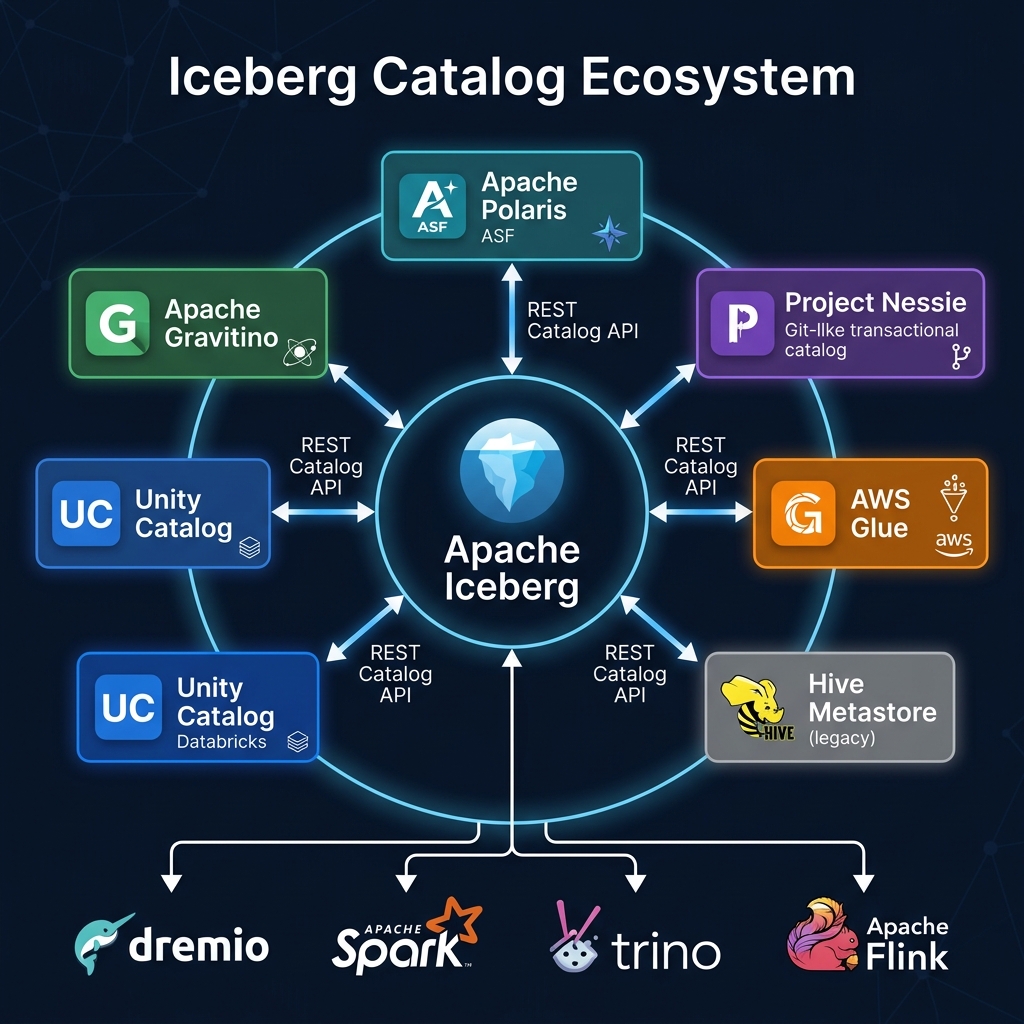
In practice, multi-engine interoperability means: a table created by Apache Spark is immediately queryable by Dremio. A streaming write from Apache Flink is immediately visible to Trino. A schema change made by Dremio (ALTER TABLE ADD COLUMN) is immediately reflected in Spark's view of the table. No data copying, no synchronization delay, no format conversion required.
The Technology Stack Enabling Interoperability
Multi-engine interoperability requires three aligned technology components:
Open Table Format: Apache Iceberg
Apache Iceberg's standardized metadata model — snapshot lists, manifests, data files — is the shared data contract. Every engine reads the same metadata files and interprets the same Parquet data files. Schema is stored in the metadata, not in the engine — so all engines see the current schema.
Shared Catalog: Iceberg REST Catalog
The Iceberg REST Catalog spec provides the shared metadata service that all engines communicate through. Each engine reads the current metadata file pointer from the catalog before accessing table data. The catalog's optimistic concurrency control ensures atomic commits prevent write conflicts.
Standard File Format: Apache Parquet
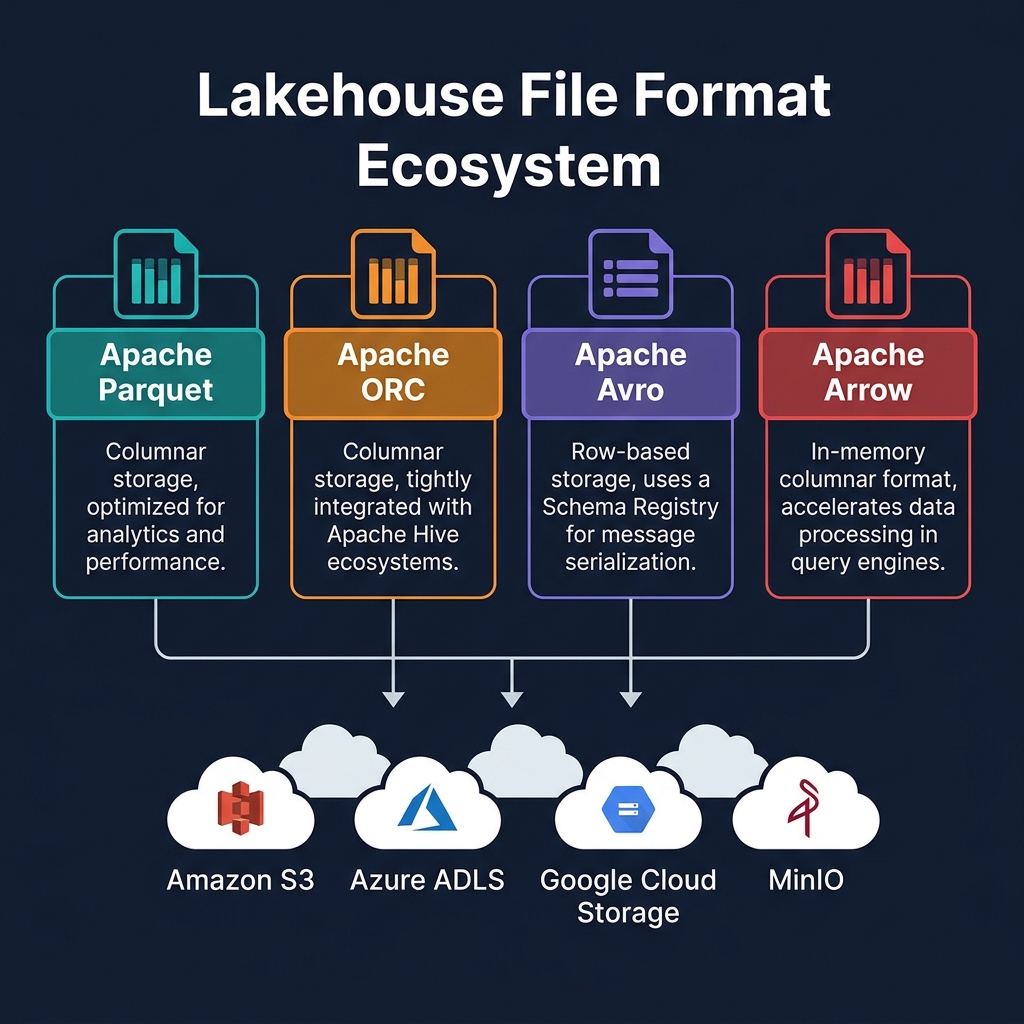
Apache Parquet as the data file format ensures that every engine can read every data file — there is no proprietary encoding that would prevent cross-engine access.
Right-Tool-for-the-Job Architecture
Multi-engine interoperability enables the 'right tool for the right job' lakehouse architecture — routing each workload type to the engine that handles it best:
| Workload | Best Engine | Why |
|---|---|---|
| Batch ETL transformation | Apache Spark | PySpark ecosystem, throughput, ML integration |
| Real-time CDC ingestion | Apache Flink | Exactly-once streaming, Debezium integration |
| Interactive BI analytics | Dremio | Reflections, semantic layer, BI tool optimization |
| Ad-hoc federated SQL | Trino | Multi-catalog, ANSI SQL, connector breadth |
| Python data science | PyIceberg + DuckDB | Local Iceberg access, zero cluster overhead |
Summary
Multi-engine interoperability is the architectural moat of the open data lakehouse. Enabled by Apache Iceberg's standardized table format, the Iceberg REST Catalog specification, and Apache Parquet's universal file format, it allows organizations to build a best-of-breed analytics stack where each workload uses its optimal engine — without creating data silos, duplicating storage, or accepting vendor lock-in. The open lakehouse's multi-engine architecture is fundamentally more flexible, more cost-effective, and more future-proof than any single-vendor proprietary platform.