What Is Decoupled Storage and Compute?
Decoupled storage and compute is the architectural principle that separates data storage infrastructure from query processing infrastructure, allowing each to scale independently. In the data lakehouse, this means:
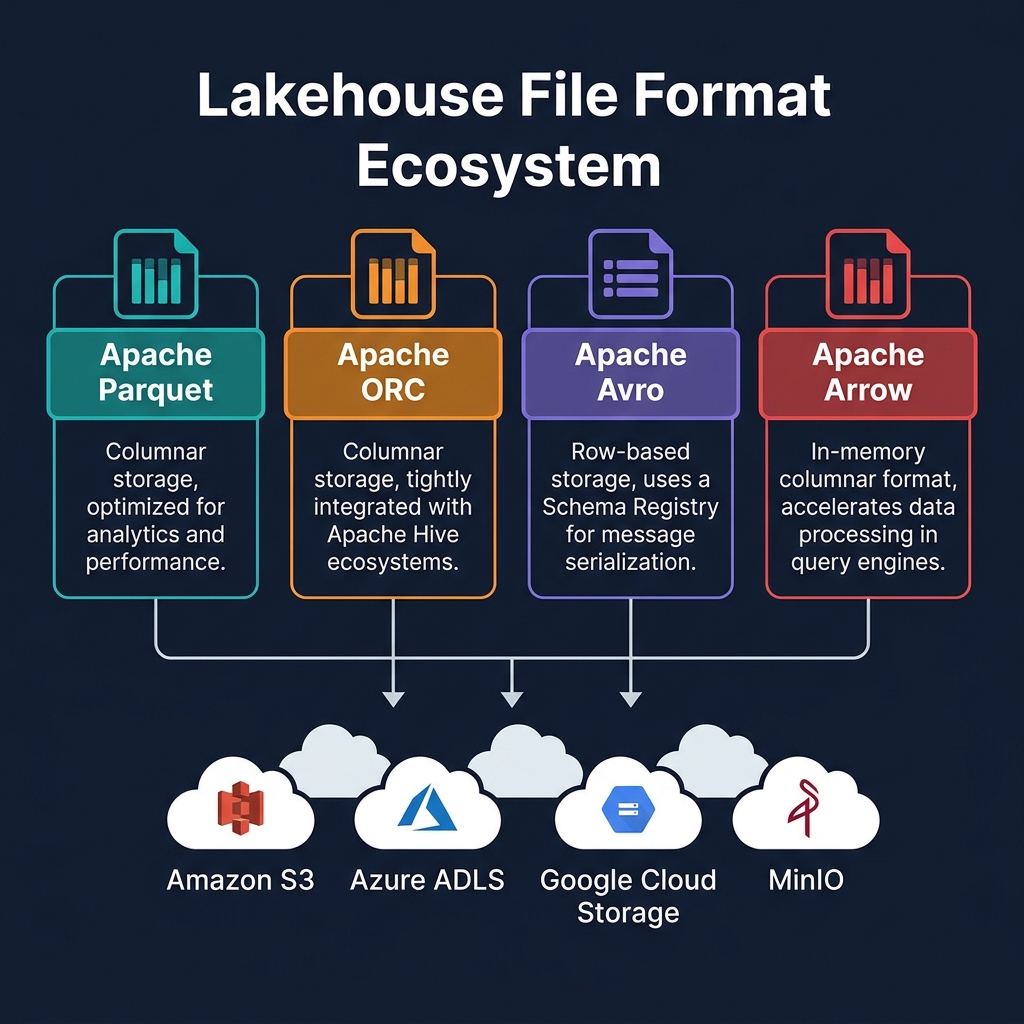
- Storage: Data lives in object storage (S3, ADLS, GCS) — infinitely scalable, always-on, billed per byte stored per month, independent of any compute infrastructure
- Compute: Query engines (Dremio, Spark, Trino, Flink) are elastic compute clusters that connect to object storage on demand, execute queries, and scale down (or shut off entirely) when workloads are idle
The decoupling is enabled by a common interface: Apache Iceberg's open table format stored in object storage provides the shared data contract that any compute engine can read. No proprietary storage format or engine-specific storage protocol — just open Parquet files on S3.
Economic Advantages Over Coupled Architectures
Decoupling storage and compute provides dramatic economic advantages over tightly coupled alternatives:
Storage Cost
Object storage costs $0.023/GB/month (S3 Standard). A coupled data warehouse that uses proprietary storage costs 5–10x more for equivalent durability and capacity. For petabyte-scale data, this difference is millions of dollars per year.
Compute Elasticity
Decoupled compute can scale to zero when idle — no queries running means no compute costs. A coupled warehouse runs at full capacity 24/7, even during nights and weekends when no one is querying. Lakehouse organizations report 60–80% lower total compute costs through elasticity.
Independent Scaling
Data grows faster than query volume in most organizations. Decoupled storage allows data to grow without proportionally growing compute — a 10x data increase doesn't require a 10x compute increase, only more object storage capacity (free at current scale, billing increases incrementally).
Multi-Engine Concurrent Access
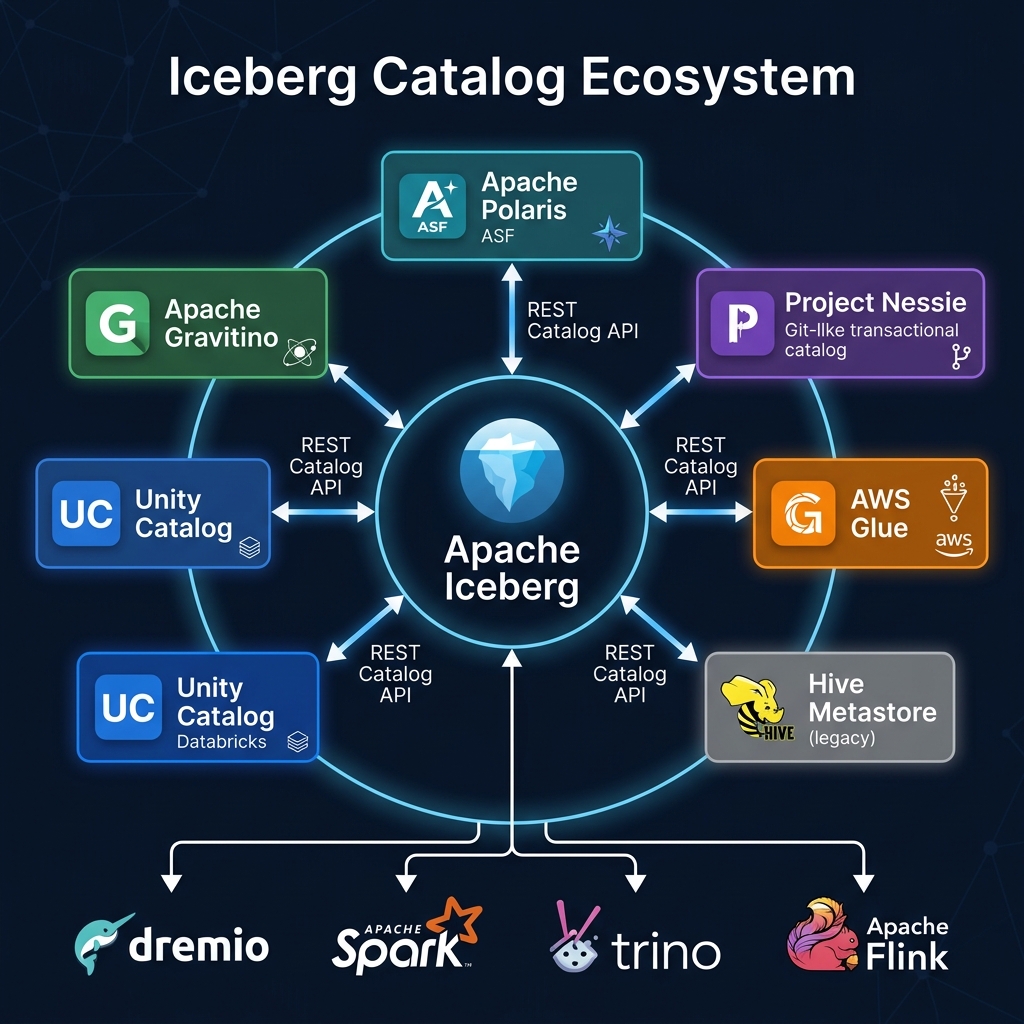
A critical capability enabled by decoupled storage is simultaneous multi-engine access: multiple compute engines can read from and write to the same Iceberg tables in object storage simultaneously, with ACID isolation ensuring consistency.
In a coupled warehouse, adding a second query engine means either duplicating data or complex synchronization mechanisms. In the decoupled lakehouse: Spark writes new data while Dremio serves BI queries and Flink ingests streaming events — all on the same Iceberg tables, in the same S3 bucket, simultaneously. Each engine's writes are committed atomically via the Iceberg catalog; each engine reads a consistent snapshot without locking others out.
Summary
Decoupled storage and compute is the foundational economic and architectural principle that makes the data lakehouse superior to tightly coupled data warehouse architectures for most modern analytical workloads. By storing data in open Parquet files on cheap object storage and processing it with elastic compute engines, organizations achieve unlimited data scale at minimal cost, pay only for active compute, and maintain the freedom to choose any engine for any workload — without the vendor lock-in, storage costs, or scaling constraints of proprietary coupled systems.