What Is the Open Lakehouse?
The Open Lakehouse is a data architecture philosophy and design principle: build your data platform on open, vendor-neutral standards so that your data is always accessible by any engine, any tool, and any vendor — now and in the future. The Open Lakehouse stands in contrast to proprietary cloud data warehouses (Snowflake, BigQuery, Redshift) where data is stored in vendor-specific formats accessible only through that vendor's engine.
Open Lakehouse components:
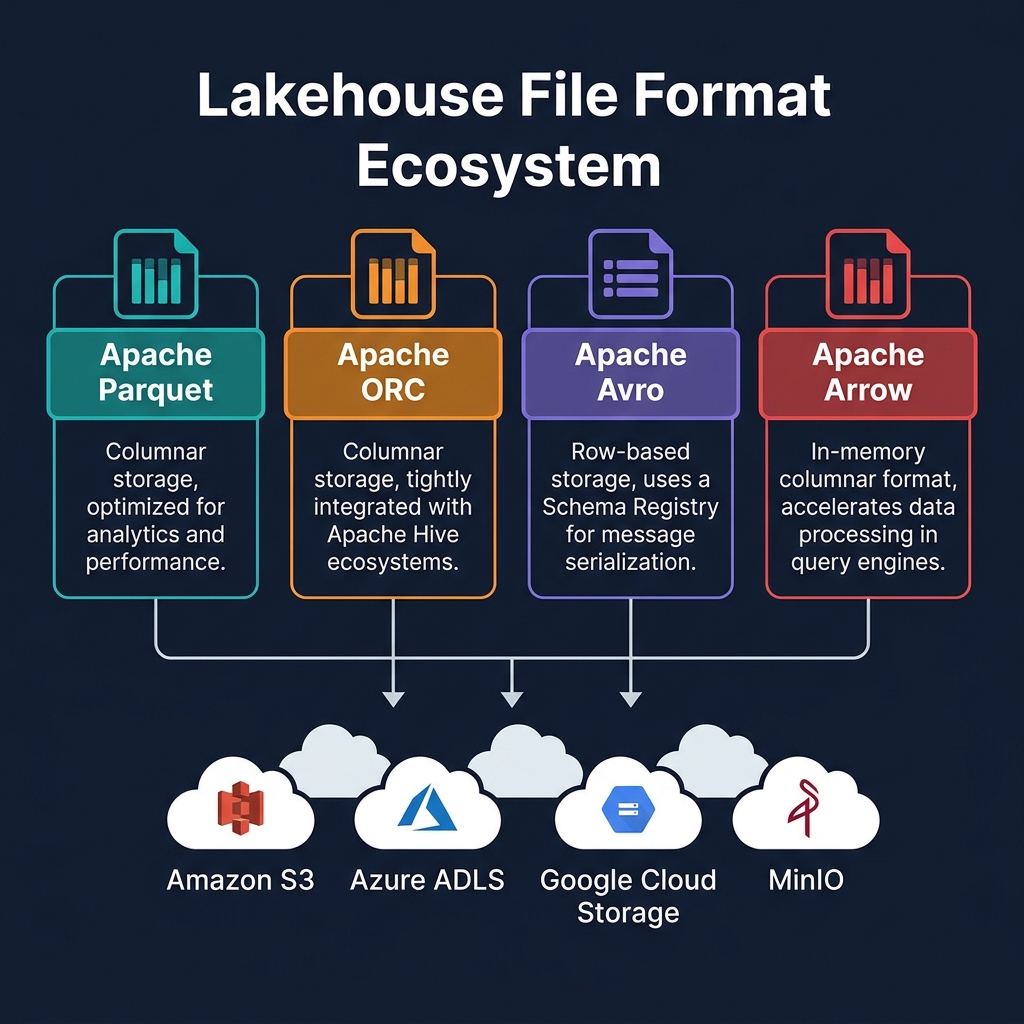
- Open file format: Apache Parquet — any tool can read and write Parquet without a license
- Open table format: Apache Iceberg — open specification, Apache-licensed, any engine can implement the reader and writer spec
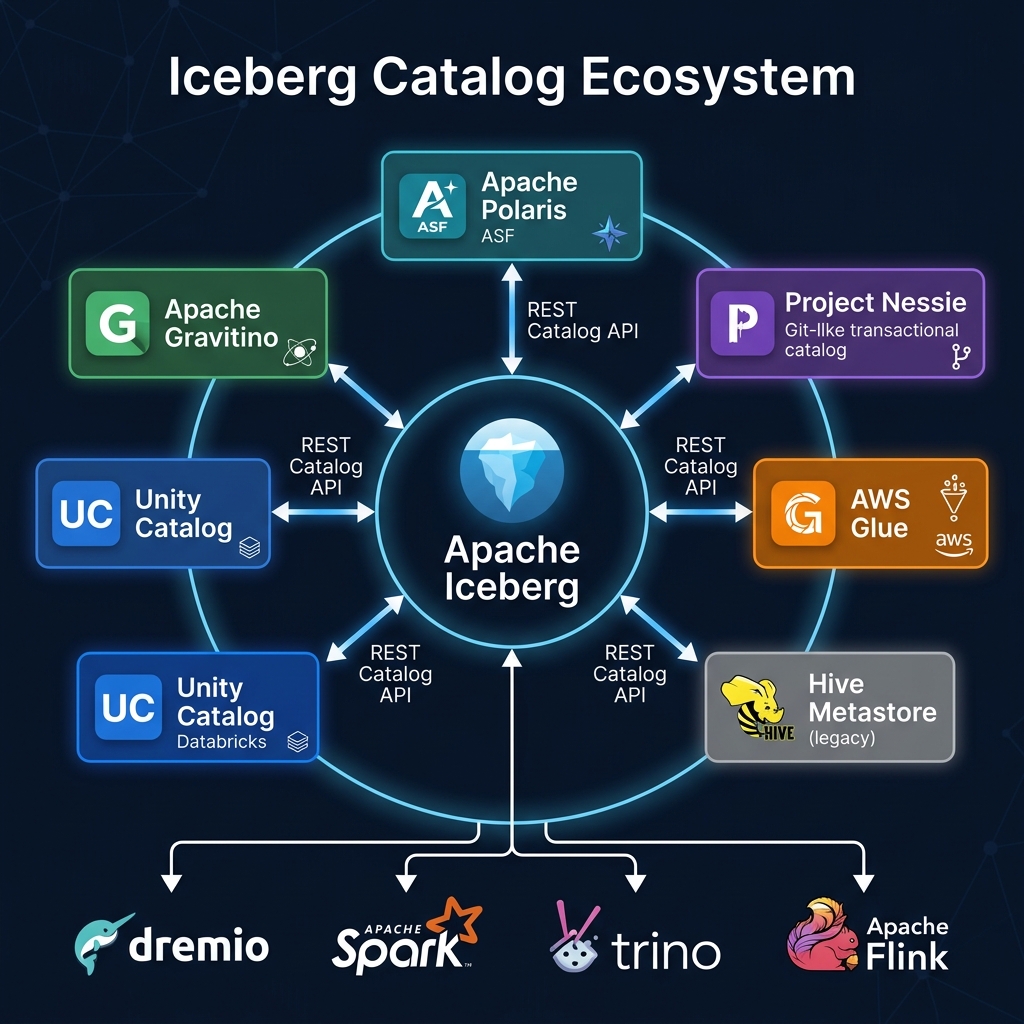
- Open catalog API: Iceberg REST Catalog specification — any catalog and any engine can implement this interface
- Open storage: Cloud object storage (S3, ADLS, GCS) — standard HTTP APIs, no proprietary storage protocol
- Open engines: Spark, Trino, Flink, and Dremio (open source core) — competitive engine ecosystem on the same data
The Cost of Lock-In
Understanding the Open Lakehouse requires understanding what proprietary lock-in costs:
- Pricing power: A vendor with your data in a proprietary format can increase prices knowing you cannot easily leave — migration would require re-loading all data into a new format
- Feature pacing: You are limited to the features the proprietary vendor builds; you cannot adopt better engines as they emerge
- Negotiating position: Every contract renewal starts from weakness — you need them more than they need you
- Architectural flexibility: You cannot use ML frameworks (PyTorch, scikit-learn) directly on proprietary storage — you must use the vendor's ML integration or pay for data export
Dremio and the Open Lakehouse
Dremio is a central participant in the Open Lakehouse ecosystem. Dremio's architecture is explicitly designed to enable the open lakehouse:
- Dremio connects to your own S3/ADLS/GCS bucket — your data is never stored in Dremio's proprietary system
- Dremio's Open Catalog implements the open Iceberg REST Catalog specification — tables registered in Open Catalog are accessible by Spark, Trino, Flink, and any other Iceberg-compatible engine
- Dremio's Arrow Flight SQL interface uses open Apache Arrow format — standard, open data access protocol
This means: if you choose Dremio for BI analytics today, your data is not locked to Dremio. You can also use Spark for ETL, Trino for federated queries, and Flink for streaming — all on the same open Iceberg data.
Summary
The Open Lakehouse is the data architecture that protects long-term organizational data investments from vendor lock-in. Built on Apache Iceberg, Apache Parquet, the Iceberg REST Catalog specification, and open-source compute engines, the Open Lakehouse ensures that your data remains yours — accessible by any engine, extensible with any tool, and governed by open standards that no single vendor controls. As the data and AI ecosystem continues to evolve rapidly, the Open Lakehouse is the architectural foundation that gives organizations the flexibility to adopt the best tools of 2026, 2027, and beyond — without paying the re-migration cost of proprietary lock-in.